
On Bottlenecks
Pigs, Protestant Farmers and How Pork Prices Brought the Nazis to Power

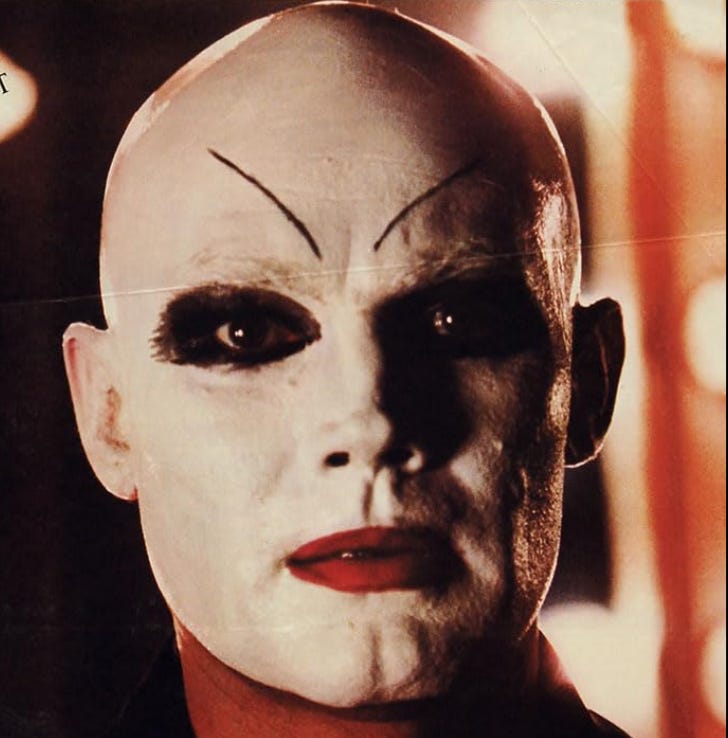
“ The World War has shown us that the stability of a nation can be undermined even more from the nutritional side than through military operations. From this fact, the enormous importance of the food industry has become clear with respect to National Socialism.”
– Richard Walther Darré, Das Schweinemord (1937)
One of the biggest fallacies about the Nazis is that Germany’s lower middle class swept them to power. Aside from being opaque, it’s a huge oversimplification that doesn’t take into account regional and religious differences, the urban-rural split as well as the pivotal question of electoral momentum. The fringe parties once regarded as beyond the pale suddenly gaining a foothold, then using it to bash down subsequent barriers to office. Take Schleswig-Holstein, the first state where the Nazis obtained an absolute majority in 1932. Located at the base of the Jutland Peninsula with Denmark to the North, you might recognise its name because it lent the Holstein part to the world’s most famous dairy cow. What’s less evident though, is that from at least the late 19th century up until today, it’s raised vastly more swine than cattle. Then there’s the state with the second-highest proportion of Nazi votes in 1932, East Hanover, which was right next door and clocked in at 49.5%. On the eve of WWII, the surrounding area was home to more pigs than anywhere else in Germany.
These aren’t fringe cases. What does makes Holstein and Hanover unique is that they sit directly adjacent to Germany’s larger port, Hamburg. But remove that from the picture and they’re pronounced details in a much broader landscape. Like Oldenburg, Pomerania and Thuringia, these states were brimming with Protestant farmers sitting on small to medium-sized tracts of land between 5-20 hectares who voted for Nazis in droves earlier than anyone else. They were also brimming with swine. Now, it might sound obvious that supporters of the world’s most notoriously antisemitic party loved their pigs. But the general historical consensus is that anti-Jewish sentiment got more virulent the closer you got to the Austrian border. Lest we forget, Hitler was Austrian and Himmler, Bavarian.
Like so many other European romantic movements, the German Völkisch tradition the Nazis adored was born aloft by nostalgia for a pre-industrial past amid the vicissitudes of modern life. It took Germany by storm from the late 19th century onwards and while its ethnonationalism may have been particularly virulent and its chatter about Aryans, galling, its luminaries like Houston Neville Chamberlain and Paul de Lagarde cut and pasted many of their racial arguments wholesale from Arthur de Gobineau. The latter was French, de Lagarde was raised by a French aunt while the Chamberlain was decidedly British. Which is to say Hannover and Schleswig-Holstein weren’t some antisemitic aberration compared to the rest of the German world nor was Germany compared to the rest of Europe. They looked different because of their agriculture.
In the late 1920s, this peculiar smattering of small farms found itself overleveraged with debt and facing tumbling global pork prices. So they decided to try something new. Today, it’s obvious this was a Faustian pact but that wasn’t readily apparent at the time. To make sense of why the Nazi agricultural proposition was so compelling, we might as well turn to the guy who designed it.
After all, Richard Walther Darré knew his swine.
Out of the Forest and Into the Fields
Darré published The Pig as a Criterion for the Nordic Races and Semites in 1927 while completing his doctorate at the University of Halle. “Two races emerge from the darkness of antiquity who, in their attitude to the pig, are direct opposites,” he wrote, stressing the beast’s central importance to Nordic Sun God rituals and insisting that swine were the centrepiece of aryan agriculture. Basically, he argued pigs were lousy for crossing the desert and used vast quantities of water, hence the prohibition for nomadic peoples. Meanwhile, the Aryan predeliction for all things pork pointed indisputably towards their history as a sedentary lot that were ‘rooted in the soil,’ the latter’s fat providing succour against the cold. During the next decade, this binary of his metastasized into a sprawling ideological program that equated nomadism with Jewish cosmopolitanism and the capricious winds of international trade.
Germany is Europe’s largest pig producer today and in Darré’s time, pork accounted for two-thirds of the average citizen’s meat intake, but this wasn’t always the case. Despite the ubiquity in German food and iconography — Nordic gods, winter slaughters for feast days and the boar as a calling card for martial prowess + pigs as metaphors for its Jewish minorities, the clearing of forests imperilled Europe’s ancient system of panage. As more and more farms sprang up across Germany’s princely states, beef and above all, mutton was all the rage by the late 18th century.
The actual taste was besides the point because the European textile industry was spinning out reams of wool and making its kingpins rich. It’s not for nothing that Robert Bakewell’s first breeding experiments centred around Leicester sheep and as news of what he was doing at Dishley spread across Europe and beyond, German farmers hopped across the North Sea to see what he was doing and before long, Saxony was the centre of the global merino wool trade. By the turn of the 19th century, they busied themselves setting up guilds + academies to harness the powers of pedigree pure breeding. And by the middle of the 1800s, the ground was shifting beneath everyone’s feet.
With the 1840s came the railways, a customs union (Zollverein) picking up steam amongst Germany’s unruly splatter of princely states, a potato blight and then in 1848, revolution. Serfdom was abolished and with Germany fast industrialising, its inhabitants piled into cities looking for work in heavy industry. Agriculture became much more intensive to meet the surging demand and while the stonking Junker grain factories to the East largely remained intact, the same couldn’t be said of the vast tracts of grazing land that had buoyed the German textile industry for so long.
When the era of free trade descended across the continent in 1860, Saxon wool was suddenly competing with stuff from Britain’s colonies. As the aristocratic holdings to the west were carved up into hundreds of thousands of smaller peasant farms, sheep just weren’t the same economic proposition. The precise nature of this shift remains a tad hazy up until the Franco-Prussian War broke out in 1870 and a newly minted German Empire emerged from Versailles’ Hall of Mirrors (!) in January of the next year. Amidst the groundswell of economic optimism, Germany’s children were hungry for meat. The numbers from here on out are staggering. Consumption ballooned from around 29 kg per person to over 53 kg on the eve of WWI with pork provisions increasing by 153.5 %. 13.5 million pigs were added to German herds between 1892 -1913 alone as beef consumption increased by around a third and mutton numbers folded in half. What we’re looking at here isn’t a trend a but a seismic shift.
Iron, Rye and Pork
Darré was right to observe that “pig-rearing in Germany only went into decline at the point when the advance of civilisation pushed into the forest.” But he frames this production glut in terms of his compatriots’ primordial hunger, ignoring that just like in the United States, the richer people got the more beef they ate. What’s more, the same parallel is true of Germany’s cattle farmers. Like their American counterparts, they may have rhapsodised about the milk yields of their spanking new shorthorns but they relied on swine to mop up dairy waste products. To have more pigs was to be more efficient, whether or not you called yourself a swine herd. Increasingly though, many did, especially small and medium-sized farmers who discovered urban price tags were a robust way of diversifying their income. They didn’t export their wares, instead opting to chase local markets and became much wealthier for it.
Still, while the story of Germany’s insatiable appetite for pork is one of nationalist fervour, its also avowedly internationalist in scope and you can see as much on a map too. In the second half of the 19th century, German swine herds in the north west gobbled up the market share of pig farmers everywhere else because they concentrated around the ports like Hamburg, ones which by the 1870s, were getting swamped with cheap American grain. The transcontinental railways had opened up the American interior from 1869 onwards and with maritime transport also turning to steam, Germany’s fledgling national economy suddenly found itself confronting something equally new. Globalisation.
Free trade may have been the midwife of the German state under the Zollverein customs union but this was different. The aristocratic Junkers who dominated the Conservative party and much of the country’s political class couldn’t compete with North America’s sprawling prairies. While the German economy was riding high for a brief spell, investing in America’s industries as the listings on the Frankfurt stock exchange ballooned, in 1873 came a financial crisis that left everyone exposed. What’s more, Bismarck’s chief banker and economic advisor at the time (Gerson von Bleichröder) was Jewish. Free trade advocates found themselves contending with an invisible hand of the market that gave but also took and they now had someone to blame for getting sour about it. So alongside heavy industry, both industrialists and agriculturalists started pushing for protectionist tariffs in what’s known as ‘The Marriage of Iron and Rye’.
In 1878, the German Chancellor Otto Von Bismarck finally obliged and while the grain kept piling in to feed hungry urbanites and pigs alike, the Junkers had been thrown a lifeline by one of their own. Meanwhile, Bismarck had chanced upon a means of funding a cash-strapped German government. The thing is though, heavy industry benefited from cheaper food prices and German agriculture, from cheaper industrial equipment. It was an alliance standing atop stilts until the rise of Chicago started flooding Europe with American pork and the hundreds of thousands of German pig farmers started making a ruckus too.
We’ve already dealt with the Pork War from the American perspective. They were furious that health concerns were being used to advance a blatantly protectionist agenda. When the ban on US pork was lifted nine years later, the American consul in Leipzig reported that the ordeal had cost US producers some 250 million dollars and they weren’t out of the woods yet. While Bismarck was forced out in 1890 and the moratorium was lifted by his successor Leon Von Caprivi the next year, said Consul looked on with dismay as the German press descended into a “fierce crusade against the old enemy on the grounds of trichina infection.”
In the intervening years, hundreds of thousands of German pig farmers had joined forces with the Junkers to create one of the most influential blocs in the Reichstag. Caprivi looked to lower tariffs in order to spur industrial production, where Germany looked like it had a comparative advantage, famously insisting that “we either export goods or we export people.” Alas for Caprivi, Germany never stopped doing both. Darre’s parents were among the millions of emigres who departed via Hamburg for the New World. The Chancellor had grossly misjudged his constituents.
Bastard Sons of the Marriage of Iron and Rye
